
How Plants Affect Customer Behavior in Commercial Spaces
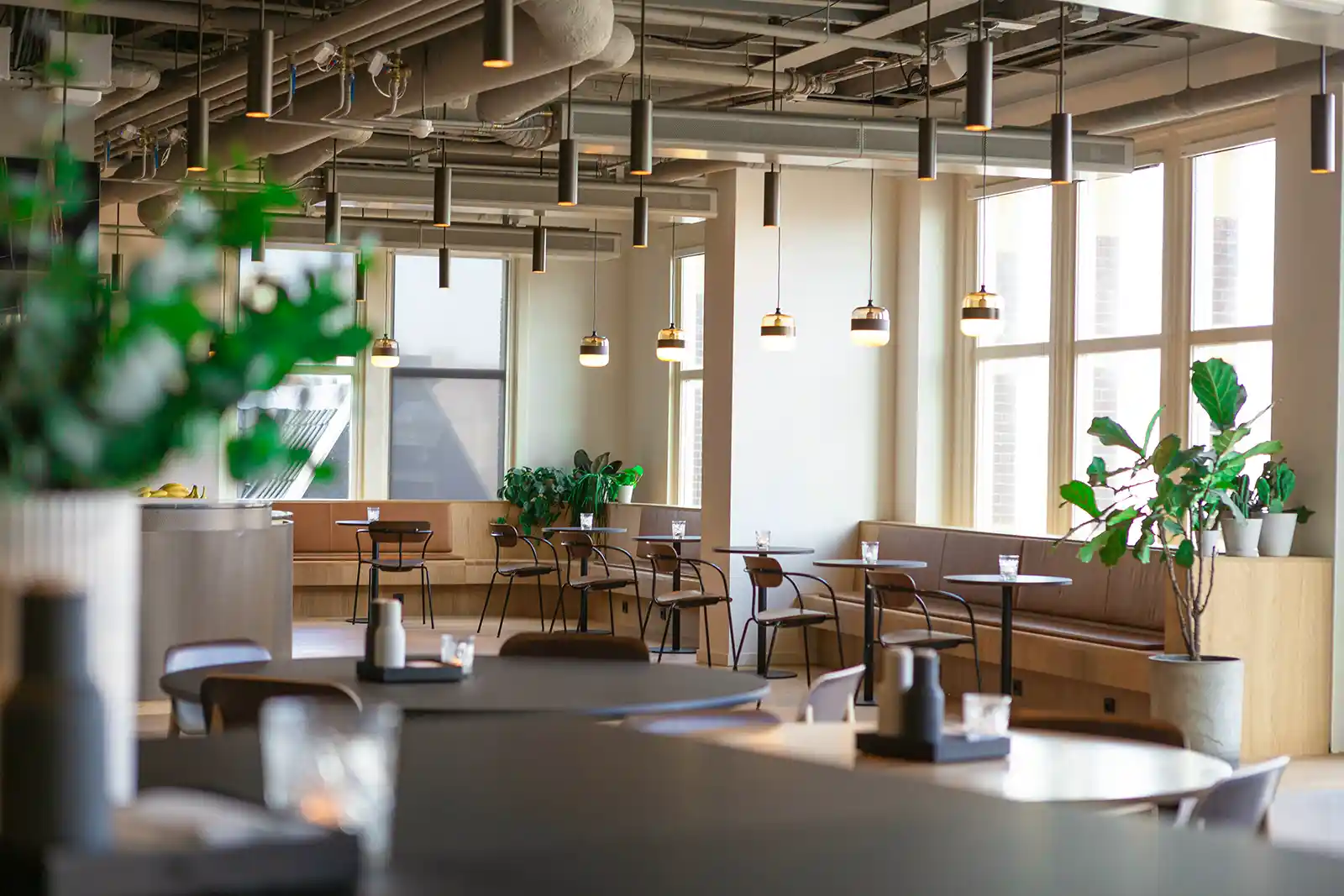
Walk into a well-designed St. Louis restaurant, hotel lobby, or retail shop and something shifts before you have consciously processed what you are looking at. The space feels worth your time. You slow down. You settle in. That shift is not accidental, and in many cases it has a direct connection to whether plants are present in the room.
The relationship between plants and customer behavior in commercial spaces is more measurable than most business owners realize. Research on dwell time, spending patterns, and customer satisfaction consistently points to the same conclusion: people stay longer and spend more in spaces that include natural elements. For St. Louis businesses serving customers on-site, whether in a Clayton law firm, a Chesterfield medical practice, a Central West End restaurant, or a retail space in Kirkwood, that finding has real financial consequences.
Why Dwell Time Is the Core Metric
The foundational mechanism behind the plant-customer behavior connection is dwell time: the amount of time a customer spends in a commercial space. The longer a customer stays, the more likely they are to purchase, and the more likely they are to spend more when they do. This relationship holds across retail, hospitality, and professional services environments.
Retail analytics firm Retail Sensing has documented the Pathintelligence finding that a 1% increase in dwell time produces a 1.3% increase in sales, a statistically significant positive relationship between the time customers spend in a space and their purchasing behavior, as documented by Retail Sensing. That is not a marginal effect. A customer who lingers an extra few minutes in a space is meaningfully more likely to purchase, and to spend more when they do.
Plants create what designers refer to as dwell zones: areas within a commercial space where customers naturally slow and pause because the environment rewards a longer look. A trailing arrangement on a display shelf, a statement floor plant near a transition point, a grouping that anchors a merchandise section. Each creates a visual anchor that extends customer engagement with that zone and with the broader space.
A 2025 study published in Frontiers in Neuroscience and indexed in PubMed Central confirmed that customer dwell time increased purchases in high-end retail settings, and that the quality of the in-store experience, not just the product offering, drove how long customers stayed, according to this 2025 Frontiers in Neuroscience study. Environments that create genuine engagement keep people in the space longer. Plants are among the most reliable and cost-effective tools for creating that kind of environment.
What This Looks Like in Different St. Louis Commercial Settings
The research applies across commercial environment types, though how it plays out varies by business category.
For restaurants, the dwell time connection is straightforward. A diner who stays longer orders more. Published research on indoor plants in restaurant environments found that plants improve customer satisfaction and loyalty by enhancing the aesthetics and restorative quality of the dining experience, as a ResearchGate study on indoor plants in restaurants found. Customers in plant-filled dining rooms rated their experience more positively and were more likely to return for subsequent visits.
For St. Louis restaurants, particularly in neighborhoods like the Central West End, Maplewood, and the Grove where competition for dining customers is strong, the quality of the physical environment contributes to both the initial visit and the repeat business that sustains long-term revenue. The plant installation does not just set a first impression. It shapes every visit.
In retail, the relationship between environment and spending is well-documented. A space that feels worth exploring produces more exploration, and more exploration produces more purchases. Plants slow the pace of a customer’s movement through a retail environment in a way that feels welcoming rather than obstructive. They create natural zones where customers pause, look around, and engage with merchandise they might otherwise have walked past. For Kirkwood shops, Chesterfield retailers, or any St. Louis retail business that depends on converting browsers into buyers, this effect is worth understanding and deliberately designing for.
In professional services environments, the customer behavior effect is different in character but equally meaningful. A patient in a Creve Coeur medical waiting room who feels calm before their appointment is more receptive, more communicative, and more likely to report a positive experience. A client in a Clayton law firm or financial advisory office who feels the space is considered and professional is better prepared for the conversation they are about to have. Patient and client experience directly influences referrals, reviews, and the likelihood of a continuing relationship.
Why Placement Matters as Much as Plant Selection
Understanding that plants affect customer behavior is one thing. Placing them in ways that actually produce that effect is another, and this is where professional expertise makes a meaningful difference.
Plants positioned randomly, without reference to how customers move through a space or where they naturally direct their attention, produce weaker effects than plants placed with genuine intention. The research on dwell time and customer experience consistently points to engagement as the key variable. Plants placed in zones where customers are likely to pause, in sight lines they naturally follow, and in configurations that feel designed rather than incidental, are the ones that produce the behavioral outcomes documented in the research.
For most commercial spaces, the highest-impact positions are the entrance or reception area where customers form their first impression, transition zones where they slow naturally as they shift from one part of the space to another, and the primary areas where they spend the most time. In a restaurant, that includes arrangements near the bar area and the visual center of the dining room. In a retail space, it includes the primary display zones and the area near checkout. In a professional office, it includes the reception and the meeting space where the core client conversation happens.
At Tropical Décor, plant placement decisions draw on more than three decades of watching how customers move through commercial spaces in Clayton, Creve Coeur, Chesterfield, the Central West End, and throughout the St. Louis metro. We know which positions produce results and which ones are cosmetically fine but commercially neutral.
Three Steps to a Better Customer Environment
The process for improving your commercial environment through professional plant design is straightforward.
First, schedule a free consultation. We walk your space the way a customer would, assess the existing environment, and identify the positions where plants will have the greatest effect on how customers experience the space.
Second, we design and install a custom plant plan. Every variety we recommend is selected for your specific light conditions, your customer flow, and your aesthetic. Installation typically takes a single morning with no disruption to your business operations.
Third, we maintain everything on a regular schedule. Our monthly maintenance visits keep your installation performing at its best, so the effect on customer experience is consistent rather than seasonal. A plant installation that declines between visits produces the opposite effect of a thriving one.
Explore our commercial plant design services, browse our year-round plant collection to see the full range of varieties we use in commercial environments throughout the St. Louis metro, and when you are ready to talk about what a plant installation could do for your customer experience, schedule a free consultation.
