
Biophilic Design in St. Louis: Where to Start
"Biophilic design" sounds like something reserved for architects working on multimillion-dollar corporate campuses. The term has an academic ring to it, and when it appears in design publications it tends to be illustrated with photographs of dramatic green walls, living roofs, and offices that look like they belong in a Scandinavian furniture catalogue.
The reality is more accessible than the aesthetic. At its core, biophilic design simply means designing spaces that connect the people inside them with the natural world. And for most businesses in St. Louis, the most practical, most impactful, and most affordable way to do that is through plants.
The Science Behind the Concept
The term, Biophilic, was popularized by biologist E.O. Wilson in the 1980s, but the underlying observation goes back much further. He postulated our nervous systems were calibrated in environments rich with living things, natural light, and organic form. They respond to them at a basic, pre-cognitive level, before any conscious evaluation is applied.
The University of Minnesota Arboretum describes biophilic design as incorporating features such as natural lighting, ventilation, natural landscapes, and plants to create more productive and healthy built environments for people. The Human Spaces global workplace study surveyed over 7,600 office workers in 16 countries and found that employees with natural elements in their workspace reported 15% higher wellbeing and 6% higher productivity. The practical application in a commercial office context does not require all of those elements — it can start with the most basic and most impactful one, which is consistently plants.
A 2024 Scientific Reports study published in Nature's open-access journal synthesised evidence from dozens of peer-reviewed papers on biophilic design in workplaces. It found significant psychological, physiological, and cognitive benefits across all measured outcomes, with greenery — direct visual access to plants — producing among the largest effect sizes of any biophilic design element studied. The benefits included reduced stress markers, improved concentration, higher reported wellbeing, and increased job satisfaction.
What Biophilic Design Looks Like in a Real St. Louis Office
In practice, biophilic design in a commercial office environment does not begin with a green wall or a full interior renovation. It begins with intentional placement of plants in the right locations, selected for the actual conditions of the space.
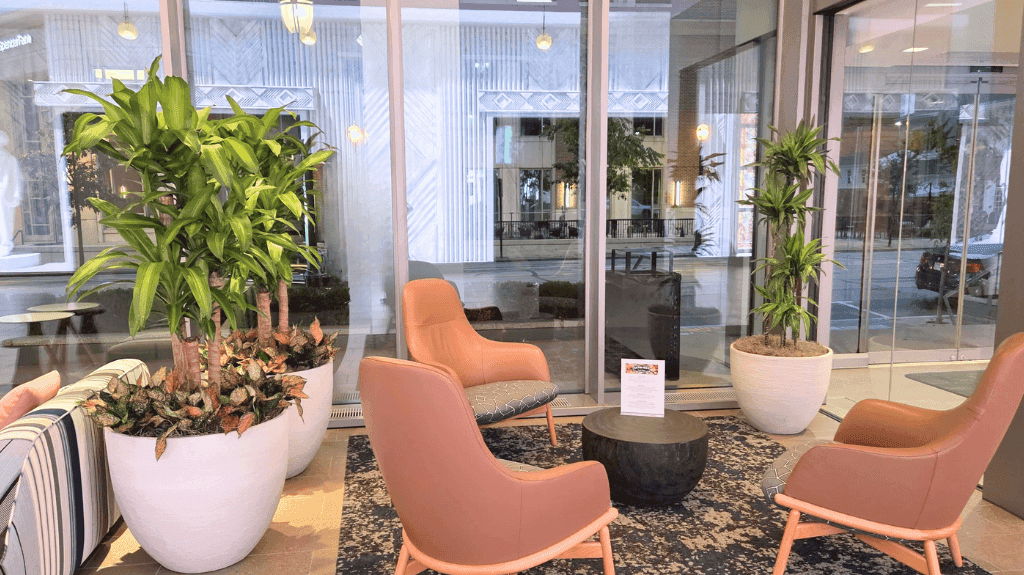
The most impactful starting points are almost always the same across the hundreds of St. Louis offices we have worked with over the years. A statement plant in the reception area or lobby — something with visual presence, scale, and personality, like a bird of paradise or a large fiddle leaf fig — creates an immediate connection with nature at the point of first impression. A collection of plants in the conference room brings warmth and life to the space where the most important conversations happen. And something living in hallways and corridors — trailing plants on shelving, or tall vertical varieties at transition points — extends the designed environment beyond the primary working spaces.
The key principle in biophilic design is intentionality. Plants positioned randomly, without reference to the actual conditions of the space or to where people spend time and direct their attention, produce weaker effects than plants deliberately positioned for line-of-sight from primary work positions. The 2024 Scientific Reports study found that direct line-of-sight to plants — being able to see them from where you work — produced the strongest correlation with positive outcomes. Placement is the design decision that matters most.
Why Biophilic Design Is Particularly Relevant for St. Louis Businesses
St. Louis office workers spend most of the year in a climate that limits outdoor exposure. The winter months, when temperatures regularly drop below 30 degrees and the wind chill makes outdoor time genuinely unpleasant, are months when the interior environment becomes the primary natural environment for most workers. The summer months, when the heat and humidity make outdoor exposure equally uncomfortable, have the same effect.
Unlike cities with milder climates where employees might take genuine outdoor breaks during the working day, St. Louis office workers are largely contained indoors for extended periods across both winter and summer. The interior environment they inhabit is, for large stretches of the year, the only environment they have access to during working hours. Biophilic design in that context is not a luxury — it is a response to a genuine need.
How to Start: What the First Step Actually Looks Like
The first step in any biophilic design upgrade for a St. Louis office is not browsing a plant catalogue. It is a professional assessment of the actual conditions in your space: the quality and direction of natural light at different times of day, the positions of AC vents and heating systems, the zones where people spend the most time and where clients form their first impressions.
That assessment is exactly what Tropical Décor provides as part of a free consultation. We have been applying the principles of biophilic design to commercial offices, medical practices, law firms, and retail spaces across the St. Louis metro for over 30 years — long before the term acquired the traction it has today. Read about our 30-year history in St. Louis to understand the depth of experience we bring to this work.
From the consultation, we develop a custom plant plan: specific variety recommendations for each zone, placement designed for optimal line-of-sight from primary work positions, container and aesthetic choices that complement your existing interior design. Installation typically takes a single morning. After that, we maintain everything on a regular schedule so the installation continues to look exactly as designed.
The result is not just a more attractive office. It is a workspace that supports the people in it in ways that are measurably better — for their wellbeing, for their productivity, and for the impression they and their clients form every day when they walk through the door. Explore our office plant services to understand the full process, and then contact us to get started.
Ready to bring biophilic design to your St. Louis office? Schedule a free consultation — we will assess your space, design a custom plant plan, and show you exactly what intentional greenery can do for your work environment.
